

Tutti al mare - isn't it?

Roman summer between carovita and improvvisazione

The Roman Summer
It doesn't come suddenly. Nor does it coincide with my Germanic rejoicing over rising temperatures and miles of open beach.
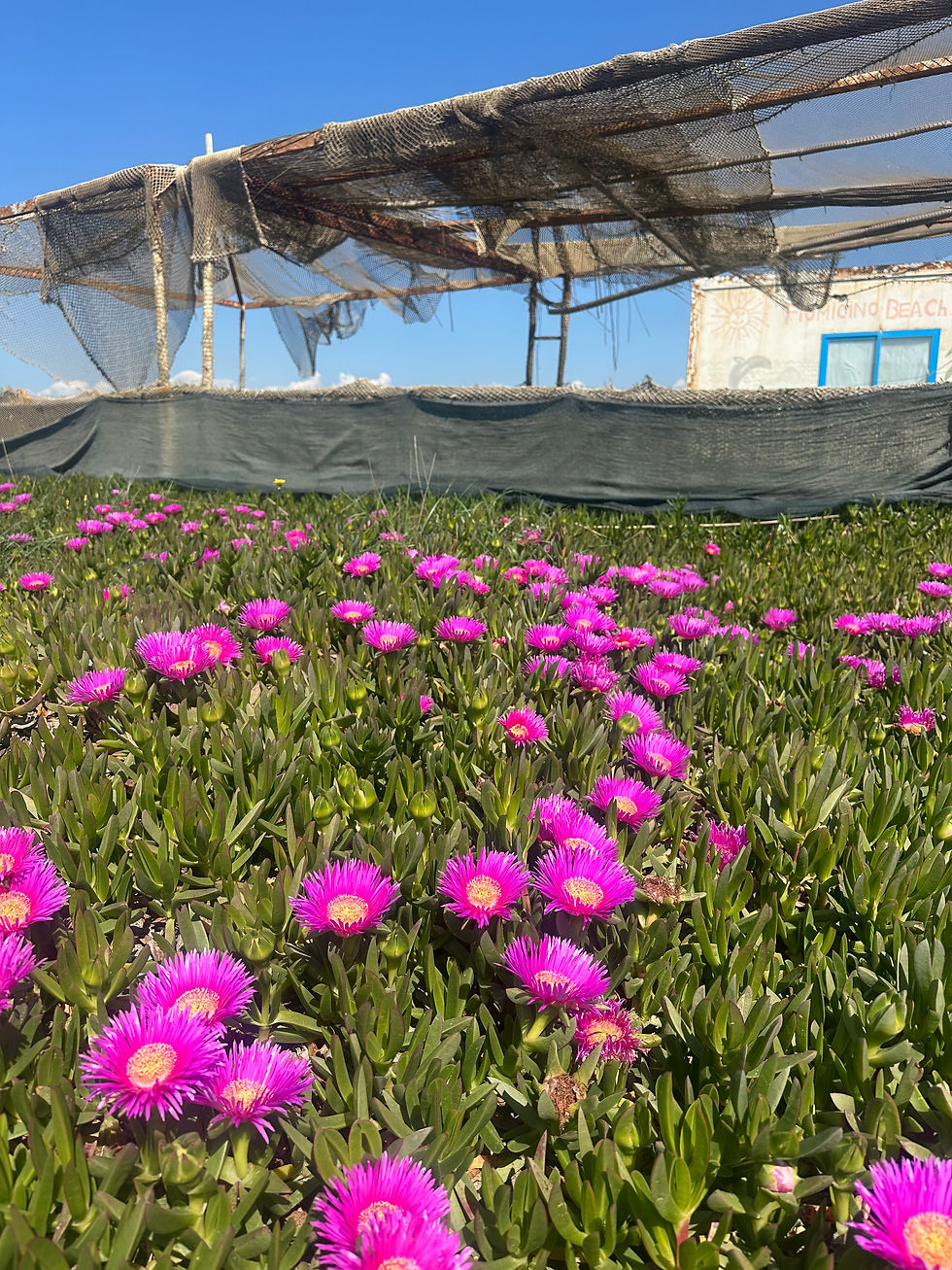
25° in the sun, 18° in the water, the beach still untouched - there, an Amazon from Germany's northeast dives blissfully into the sand and waves.
Locals, on the other hand, dressed in moltoprene, glide over waves, take off into the air or wait for the calm to end.
It is the beginning of May.

Roman people
have a higher threshold for leisurely beach fun: temperatures in the upper 20s and preferably with comfortable loungers. This is the case in early/mid-June. This is when beaches awaken from the fallow slumber of nine months.

Beach operators furnish their sandy area: spiaggia attrezzata with loungers and parasols, lettini e ombrelloni .
With masonry or wooden structures for changing rooms, showers, restrooms, a bar, a restaurant, and a property boundary, it becomes something stable: a bathing establishment - stabilimento balneare. Both cost around €30 a day for two loungers and an umbrella during the week, cheaper by the week or during off -peak season. On weekends, in July and August, and depending on the location and amenities, there's plenty of room for profit maximization. A set can easily cost €60. In the posh Stabilimento, it costs considerably more.
But that's well known. It's the law of the market. So why the news whining online and offline in 2025? The fuss during the media silly season?
The Roman summer has barely arrived,
The press headlines are outdoing each other with their Cassandra-like cries. Prices are emptying the beaches, laments La Repubblica , Rome's newspaper. Elsewhere, there is talk of beach-loving Italians fleeing to the mountains and of government failure. At the government's behest, the tourism industry has delocalized overtourism by 2025 and redirected it to the mountains of Abruzzo, the Alps, and the Dolomites. A 5% increase in the hotel industry is expected there. The battle cry for summer migration, "tutti al mare," is giving way to a momento d'oro in montagna, estimates sardegnareporter.it . This has not yet been proven. Only after Ferragosto will there be figures and objective statements – differentiated by guest nationality. Anyone familiar with the respectable prices in mountain hostels would hardly imagine a price flight by Italians. Especially not in the hot month of August.
German newspapers are singing the same tune. BILD suggests a price explosion with a headline: "1,500 euros for a beach day in Italy." Only those who read on (which not everyone does) learn about the Tuscan luxury hotel with exclusive beach service. Even FAZ.NET dampens the summer mood, albeit more cautiously: "Relaxed even without a beach." ZDFonline reads about the "expensive place in the sun." Merkur predicts "a yawning emptiness in Italy." And Handelsblatt knows the reason: "The Mediterranean lacks oligarchs."
Italy's mega coastline
With around 8,000 km of coastline - according to the Italian universal encyclopedia Treccani - this new mountain trend expected for 2025 is more than surprising.
Meanwhile, the Association of Beach Tenants is defending itself against accusations of price gouging, although it admits a 15-25% decline in rented loungers and umbrellas by July 2025.

Beach operators are reluctant to increase prices. Those I've asked at "my" beaches within a 50-km radius of Lido di Ostia assured me: "As every year," the same prices as every year. "Quasi," some even add. I'll take that as the truth, alla romana.
And indeed, beach operators would be well advised not to raise their rates in 2025. Because:
It is simmering on the EU competition market
By the end of 2023, the measurements for Italy's coastline—including all the tiniest islands—had shot up to a whopping 11,200 km, according to an Italian working group. This was the information sought by the Giorgia Meloni government, which is expected to reopen the issue of allegedly illegal beach concessions, under pressure from the EU.
The beach business has been firmly in the hands of Italian families for generations, like a birthright. Without a public tender, accepted without question by the municipalities. And the famiglia also includes the many cugini who make up the network. Expand almost limitlessly, but sustainably. 300,000 employees in over 7,000 stabilimenti generate a respectable €15 billion during the June-September beach season. The EU warns that this is a lucrative industry that must be publicly accessible, even to service providers outside Italy.
However, the lido lobby fears global competition in its national service market. Asians, Africans, and Albanians, for example, have long been working in the low-wage sector as beach vendors and itinerant beach masseuses.
A large Chinese corporation, for example, operating as a beach manager with services that undercut the market would force local employees into wage dependency. Worse still, it would soon bring its own compatriots along with it. Unthinkable! Italian national pride is at rock bottom! And reliable, albeit seasonal, income for entire extended families is likewise. In a country whose unemployment rate of currently 6.3% is a persistent problem. Especially from central Italy southward.
Like a magic hat
This is where a calculation example commissioned by the government comes into play.
Managed sandy beaches are only found on about 2,000 km of coastline. On cliffs and steep coastlines, they are called " spiaggia libera." This also applies to many stretches between commercially operated beach areas. According to the new measurements by the Pro Lido Committee, this would be far less than a fifth of the number of paid beaches. And this would put the EU's competition demands out of the running. For Bella Italia , this would mean protection from ruinous undercutting on the beaches. Whoever does the math wins! The EU legal issue is off the table for now.
Nevertheless, the situation at the Lido remains complicated. The rise in prices for supermarkets and restaurants, as well as for gas and electricity supplies, has reduced the leisure budgets of many Romans – but has also activated their talent for improvisation.
Ferragosto is here!
A Friday. No engine noise wakes me up like it usually does around 6 a.m. I sleep with the windows open, protected by mosquito netting to prevent bites and breakage.

August holidays? Do you mean the month of August? No. Emperor Augustus. The first Roman emperor (31 BC - 14 AD). Starting in 18 BC, he rewarded the rural population with the Feriae Augusti after the harvest with leisure and festivities. According to the Roman calendar, which began in March, this was the 6th month of the year. After the calendar reform shortly before the turn of the millennium, it became the 8th month, which was called "August" – in honor of the emperor.

From the 5th century onward, Christians adopted the pagan tradition, established a high festival on August 15, the Assumption of Mary, and suspended work. It wasn't until 1950 that it became a Catholic holiday.
Nevertheless, earthly pleasures still dominate Italian greeting cards today. A popular family day between joy and sorrow – like Christmas . hottest day of the year, at the turning point of summer, il mare is and will remain the sought-after leisure destination in 2025:
Many businesses, shops and offices close for all employees, often from August 9th to the end of August.
Ferragosto in review
Are these just empty wishes? Are the Romans coming to the sea or not? Despite rising prices? On August 15, I'm early at the beach in Fregene, 20 km north of Rome. A free and equipped beach. A hybrid beach, so to speak. You can rent, but you don't have to. It's completely empty at 8:30 a.m.

The beach furniture is piled high. Boys are waiting to gracefully carry the rentals to the desired sunbathing spot for the paying beachgoers.
Hardly a guest is in the bar for the cheap Italian breakfast for €3. For four people as a family, it would already be a hefty €12. Senior citizens on pensions enjoy food and coolness in the dining room.
Midday. The beach is filling up with self-caterers and their locally sourced beach gear. The piles of stacked loungers provide welcome shade.


The sea breeze blows through the restaurant during the pranzo . There's no smell of fritto misto. Italian beachgoers don't skip lunch, but they enjoy it from preemptively filled Tupperware containers.

Afternoon. The beach is densely populated in a loose formation.


The ratio of self-catering to beach rentals clearly favors the thrifty.
And if the heat gets too much for you, you can also go into the water. But please, without strenuous exercise, which is swimming. Splashing on the shore or on an air mattress is fine. And getting wet up to your knees, or at most your waist, is enough to cool you down for some. Older mermaids with wavy hair and gold adornments shy away from full-body baths anyway.
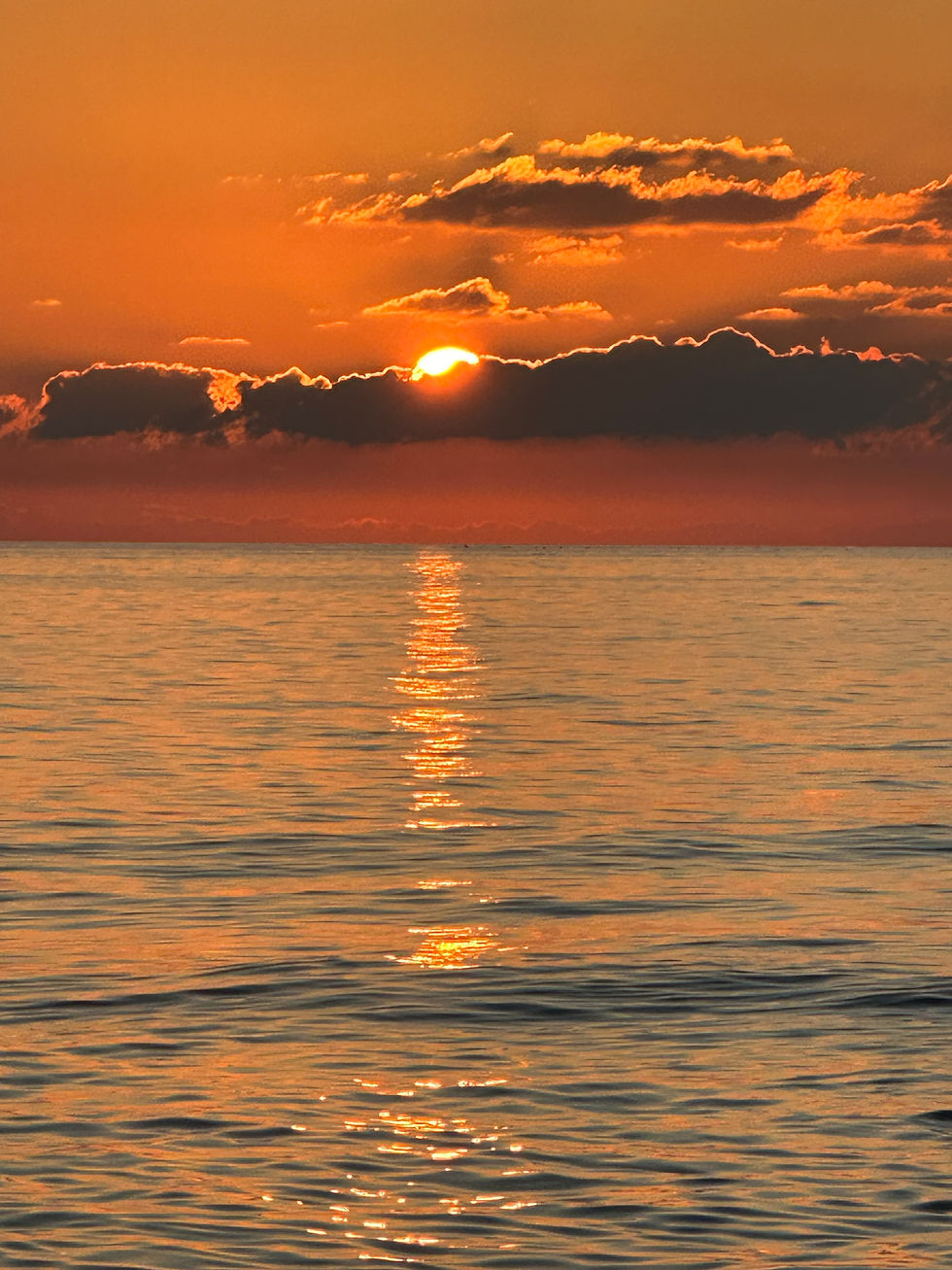
Those who stay in economy mode with pleasure until sunset will experience an open-air spectacle:
Those who leave early can still immerse themselves in the urban folk festival. In the center, key spots like supermarkets, pharmacies, and restaurants remain open on Ferragosto . Movie theaters, museums, and public transport are even half-priced—compensation for enduring the crush of the holiday during the Holy Year. Mussolini already knew in 1931: discounted Ferragosto public transport increases public enjoyment.

Fireworks in many places
My impressions of
Ferragosto and Rome's beach life
are local and perspective.
But
they move away from scaremongering
in the noise of the media forest.


Comments